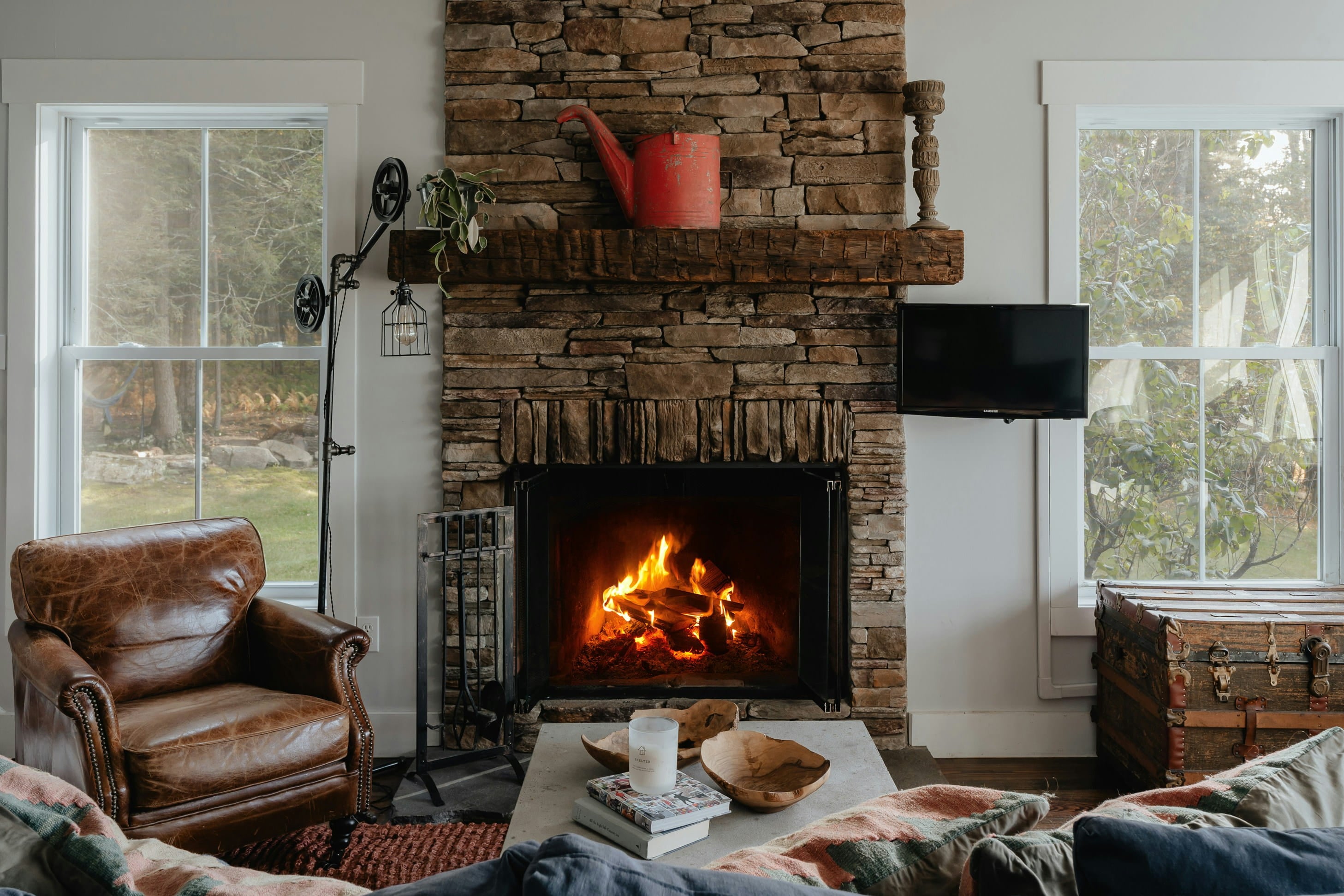
On a crisp winter evening, it’s easy to understand why fireplaces still hold such appeal. For generations, wood-burning fireplaces symbolize warmth, comfort, and a sense of home.
Yet today, many California homebuyers ask,
Are wood-burning fireplaces illegal in California?
No, wood-burning fireplaces are not illegal statewide. However, most restrictions happen at the local and regional level, not through a single state law.
This question comes up frequently during home tours, especially when buyers notice newer homes without traditional fireplaces. California’s air-quality laws are among the strictest in the country, and residential wood-burning is now closely regulated. While wood-burning fireplaces are not outright banned statewide, the reality is far more complex and increasingly restrictive.
Today, we explain the current legal landscape, why regulations exist, and what homeowners and buyers should realistically expect moving forward when exploring new homes in Northern California or Southern California.
California regulates wood burning primarily to reduce fine particulate matter (PM2.5), which poses serious health risks. According to the Environmental Protection Agency, residential wood smoke is a major source of PM2.5 during colder months, contributing to asthma attacks, cardiovascular disease, and other respiratory conditions.
Because of this, California allows cities and air districts to enforce stricter rules than federal standards. In some regions, those rules make wood burning effectively illegal on many days of the year.
Can You Have a Wood-Burning Fireplace in California Today?
Yes, you can, but only under specific conditions. Existing fireplaces that were legally installed are generally allowed to remain. However, their use may be restricted depending on where you live and current air-quality conditions. In many parts of the state, homeowners may only burn wood on days when air pollution levels are low.
This means owning a wood-burning fireplace in California does not guarantee they can freely use it. On designated no-burn days, even a single evening fire can result in fines.
What Are California’s Wood-Burning Fireplace and Stove Regulations?
Understanding California wood-burning stove regulations requires separating federal manufacturing standards from local usage laws.
At the federal level, the EPA enforces New Source Performance Standards (NSPS) under the Clean Air Act. These rules govern how new wood stoves, inserts, pellet stoves, and similar heaters are manufactured and sold. According to the EPA, NSPS standards limit how much particulate matter these devices can emit, but they do not apply to existing fireplaces already in use.
The EPA also clarifies that traditional open fireplaces are considered decorative and are not regulated under NSPS. Instead, fireplaces are included in a voluntary program that encourages manufacturers to design cleaner-burning models.
Where California goes further is in how and when wood can be burned, not how fireplaces are built.
Regional Rules, No-Burn Days, and Air Quality Restrictions
Most restrictions that homeowners encounter come from local air districts.
In the Bay Area, the Bay Area Air Quality Management District enforces Winter Spare the Air Alerts between November and February. On these days, burning wood indoors or outdoors is illegal across the entire region. This rule applies to private homes, apartment buildings, hotels, and even restaurants.
The regulation also includes a year-round prohibition on excessive chimney smoke. Smoke that obscures visibility by more than 20 percent is considered a violation, even outside of no-burn days.
In Central California, the San Joaquin Valley Air Pollution Control District enforces Rule 4901, one of the strictest wood-burning regulations in the country. This rule requires noncompliant wood stoves to be replaced when a home is sold and mandates curtailment on high-pollution days.
According to air district data, residential wood burning can contribute up to 30% of wintertime PM2.5 pollution in some California air basins, which explains the intensity of enforcement.
Wood-Burning Fireplaces in New Construction Homes
If you’re touring new homes in Southern California, you may notice that wood-burning fireplaces are increasingly absent. This is a regulatory response.
Many local ordinances prohibit wood-burning devices in new buildings altogether. Others limit how many fireplaces can be installed per development. Builders often choose gas or electric alternatives because they are easier to permit, comply with climate action plans, and reduce long-term regulatory risk for buyers.
For many homebuyers, the absence of a wood-burning fireplace is now a sign of future-proofing rather than a missing feature.
What Are The Rules for Existing Wood-Burning Fireplaces?
Homeowners with existing fireplaces are not required to remove them in most cases. However, ongoing compliance matters.
You must follow no-burn day rules, burn only clean and seasoned wood, and maintain your chimney to avoid visible smoke violations. Some jurisdictions also restrict the transfer of noncompliant devices during home sales, requiring replacement before ownership can change hands.
The Environmental Law Institute notes in its 2021 report Indoor Wood Burning: Policies to Reduce Emissions and Improve Public Health that many jurisdictions now use home sales as a strategic moment to phase out older, higher-emitting devices.
What Are The Legal Alternatives to Wood-Burning Fireplaces in California Homes?
As regulations tighten, many homeowners choose alternatives that offer ambiance without compliance headaches. Gas and electric fireplaces are widely permitted, and EPA-certified pellet stoves are allowed in some regions because they produce far fewer emissions.
These alternatives align more closely with California’s long-term air-quality and climate goals while still providing the warmth and visual appeal many buyers want.
What California Homeowners Should Know Before Installing or Using a Fireplace?
Before installing or using any fireplace, homeowners should always check local air district rules first. Regulations can vary significantly even between neighboring cities. It’s also important to consider how future policy changes may affect usability over time, especially for buyers planning long-term ownership.
Final Thoughts
So, are wood-burning fireplaces illegal in California? Not entirely, but they are clearly being phased out through tighter use restrictions, local bans, and new construction rules.
For today’s homebuyers, especially those considering newer developments, understanding these regulations is essential. Choosing cleaner alternatives is about aligning with where California housing is headed.
Frequently Asked Questions
Q1: Do no-burn days apply to older fireplaces?
Yes. No-burn rules apply regardless of when the fireplace was installed.
Q2: Are gas fireplaces affected by wood-burning bans?
Generally no. Gas fireplaces are typically exempt unless otherwise stated by local ordinance.
Q3: Can an HOA restrict wood-burning fireplaces?
Yes. Homeowners' associations can enforce stricter rules than local governments.
Q4: Are outdoor fire pits regulated the same way?
Often yes, especially on no-burn days, though rules vary by air district.


