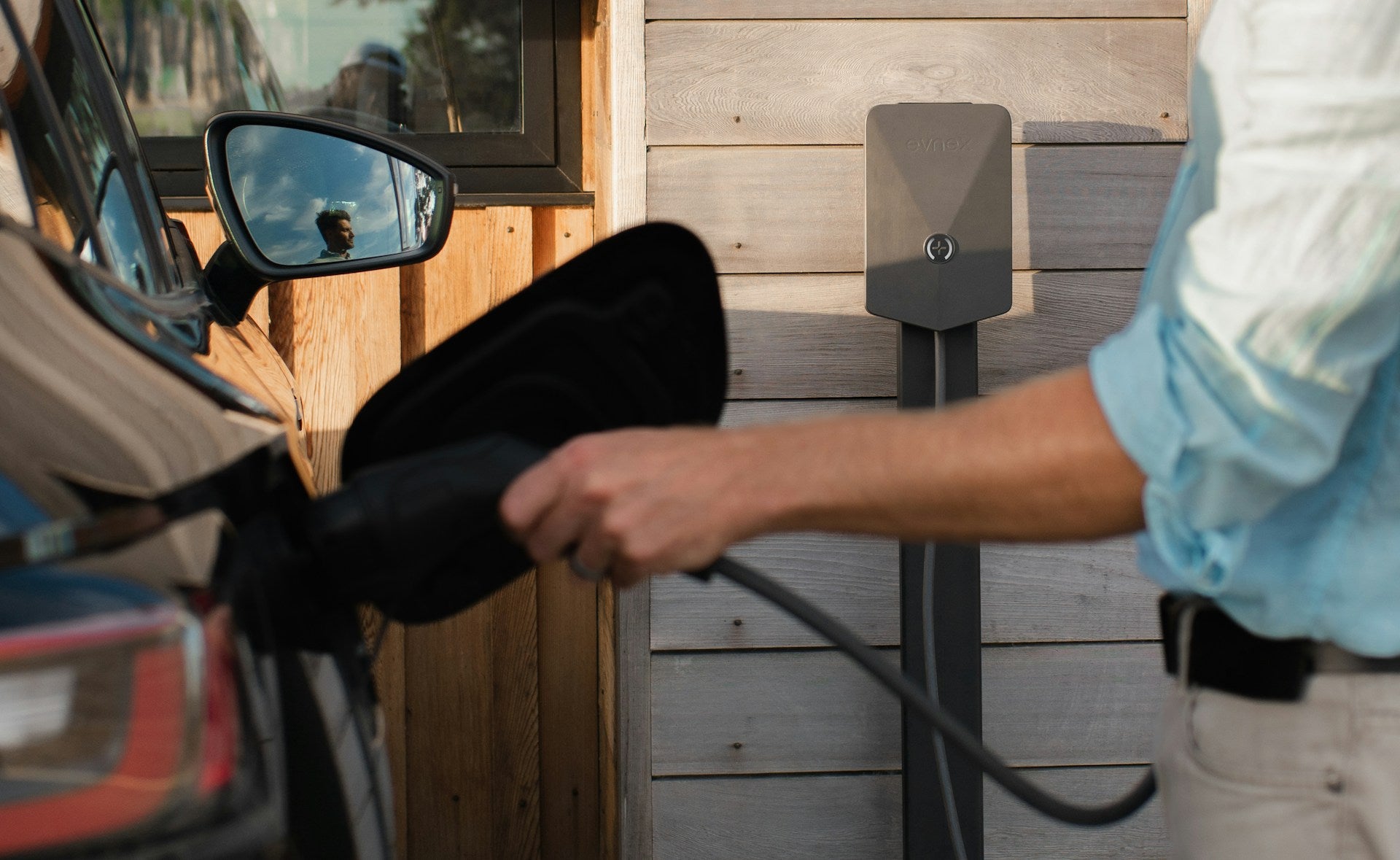
People are buying electric vehicles and building lifestyles around them. As more families plug in instead of filling up, EV-ready homes in California are quickly becoming a smart, forward-thinking standard rather than a luxury feature.
If you’re shopping for a home, chances are high that an electric vehicle or two is in your near future.
Designing your home for the next generation of EVs is about electrical capacity, smart energy management, solar integration, and future-ready infrastructure. Let’s walk through how to truly optimize your home for what’s ahead.
Why Optimizing for EVs Matters in California
California continues to lead the nation in EV adoption. According to the California Energy Commission, ZEVs account for over 2.5 million new vehicle sales in the state as of 2025. The state’s mandate to phase out new gasoline-powered vehicle sales by 2035 further accelerates demand.
#1 Home Charging Is the Norm
Residential infrastructure is the real backbone of EV adoption. Here’s why homeowners prioritize home charging:
- Lower cost per mile compared to public fast charging
- Overnight convenience
- Reduced dependence on crowded public charging networks
California EV Adoption Snapshot (2023–2025)
|
Year |
% of New Vehicle Sales That Are EVs |
Public Chargers Installed |
State Target |
|
2023 |
21% |
90,000+ |
100% zero-emission by 2035 |
|
2024 |
24% |
105,000+ |
Grid modernization underway |
|
2025 |
25%+ |
120,000+ (est.) |
Continued infrastructure expansion |
Step 1: Upgrade Electrical Infrastructure for Future Capacity
#1 Panel Capacity & Load Calculations
Most modern homes include a 200-amp electrical panel. For many households, that’s sufficient for:
- HVAC systems
- Electric appliances
- One Level 2 EV charger
But the next generation of EV-ready homes in California often plan for dual EV households. If you anticipate charging two vehicles simultaneously, a load calculation based on the National Electrical Code (NEC) is essential.
A licensed electrician will evaluate:
- Continuous load (EV charging qualifies as 125% load factor).
- Existing appliance demand.
- Solar backfeed capacity.
- Future battery storage integration.
In some cases, upgrading to a 400-amp service panel may be beneficial.
#2 Dedicated 240V Circuits for Level 2 Charging
Level 2 charging (240V) is the residential gold standard.
|
Charging Type |
Voltage |
Miles of Range Per Hour |
Best Use Case |
|
Level 1 |
120V |
3 to 5 miles |
Emergency or light commuting |
|
Level 2 |
240V |
20 to 40 miles |
Daily residential charging |
|
DC Fast Charging |
400V+ |
150 to 250 miles in 30 min |
Commercial/public stations |
Most homeowners install either:
- A hardwired wall charger
- A NEMA 14-50 outlet with a plug-in unit
Step 2: Integrate Smart Charging Technology
Installing a charger is just the beginning. The next generation of EV-ready homes in California includes smart energy management systems (EMS).
#1 Smart Load Balancing
Modern chargers communicate with your home’s electrical panel to:
- Avoid breaker overload
- Automatically reduce the charging rate during peak appliance usage
- Optimize for time-of-use (TOU) utility rates
#2 Preparing for Bidirectional Charging (V2H & V2G)
Next-generation EVs are beginning to support:
- Vehicle-to-Home (V2H)
- Vehicle-to-Grid (V2G)
These systems allow your car battery to power essential home circuits during outages or even send electricity back to the grid.
Step 3: Pair EV Charging with Solar and Battery Storage
#1 Solar Integration Under NEM 3.0
California’s updated net metering structure encourages pairing solar with storage rather than exporting excess energy midday. By charging your EV during peak solar production hours, you:
- Maximize self-consumption
- Reduce grid draw
- Improve long-term ROI
#2 Battery Storage for Grid Resilience
Battery storage systems offer:
- Backup during wildfire-related outages
- Peak demand reduction
- Energy arbitrage opportunities
|
Component |
Average 2025 CA Cost |
Benefit |
|
Level 2 Charger Install |
$800 to $2,000 |
Faster charging |
|
Solar (6–8 kW) |
$15,000 to $22,000 before incentives |
Offset energy use |
|
Home Battery (10–15 kWh) |
$9,000 to $14,000 |
Backup and peak savings |
Myth Busted: “Solar alone powers everything.”
Without storage, solar shuts off during outages. Battery integration is key for resilience.
Step 4: Design for Multi-EV Households
California families increasingly own two EVs. Planning ahead means:
- Installing dual-charging circuits
- Using smart circuit-sharing chargers
- Designing garage layouts for cable reach
High-powered 48-amp chargers deliver faster charging speeds than standard 32-amp models. Installing appropriately sized conduit now prevents costly upgrades later.
Why New Construction Makes EV Optimization Easier
Building EV infrastructure into new construction reduces installation complexity and cost. Wiring walls before drywall, planning panel space, and allocating garage capacity make everything smoother.
Forward-thinking communities in Northern California have been increasingly incorporated sustainable design from day one, including energy-efficient appliances, smart thermostats, and EV-capable garages.
When EV readiness is part of the blueprint, homeowners avoid expensive retrofits later.
Final Thoughts
The shift toward electrification is not slowing down. As EV adoption accelerates, optimizing your home today ensures you’re prepared for tomorrow’s technology.
Choosing EV-ready homes in California means thinking ahead about infrastructure, energy management, and long-term value. Planning for EV capability today delivers convenience, resilience, and future-ready living, regardless of whether you’re building new or buying in an energy-conscious community.
Frequently Asked Questions
Q1: How long does a home EV charger typically last?
Most Level 2 chargers last between 8 and 12 years, depending on climate exposure and usage frequency. Weather-rated chargers (NEMA 3R or 4) designed for outdoor use tend to perform reliably even in California heat.
Q2: Do EV chargers increase homeowners' insurance costs?
Professionally installed, UL-listed chargers generally do not significantly raise insurance premiums. It’s still wise to notify your insurer after installation to ensure coverage reflects the electrical upgrade.
Q3: Can I install an EV charger in a condo or townhouse?
Yes. California Civil Code Section 4745 limits HOA restrictions on EV charger installations, although approval and shared electrical planning may still be required.
Q4: Are EV chargers safe in extreme heat conditions?
Modern chargers include built-in thermal sensors that automatically adjust charging speeds if internal temperatures exceed safe thresholds, ensuring safe operation even during hot California summers.
Q5: What maintenance does a home EV charging system require?
Maintenance is minimal. Periodically inspect cables for wear, ensure firmware updates are installed for smart chargers, and schedule professional electrical inspections if you upgrade panel capacity.


